1.1 Introduction
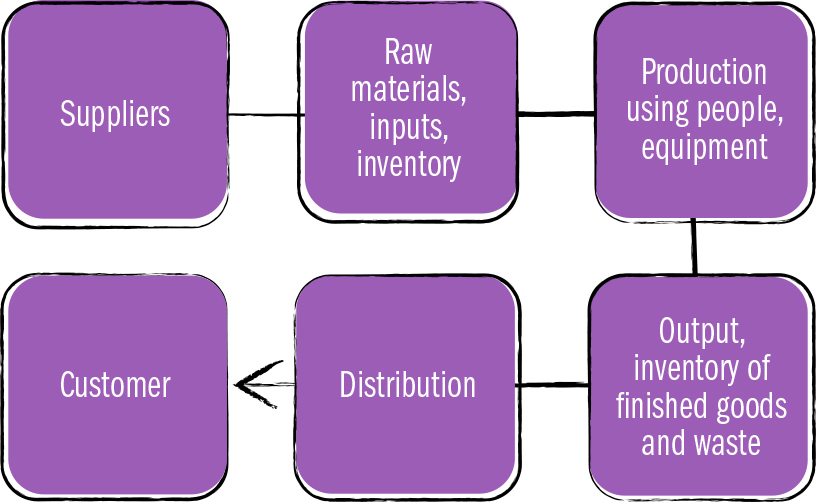
Operations is the business function concerned with the transformation of inputs into outputs (see Source 1.1). The operations manager oversees this process by planning production, organising inputs, monitoring the operations process and controlling the outputs. Outputs can be both physical goods and services. The output may be finished goods sold to final consumers, an intermediate good that will be used as inputs by other businesses or a service provided to consumers or businesses.
Many businesses provide both a physical product and an associated service. For example, a restaurant will provide a good – the meal itself – and the waiting service to the customer’s table.
Interactive 1.1 Simplifying the operations process
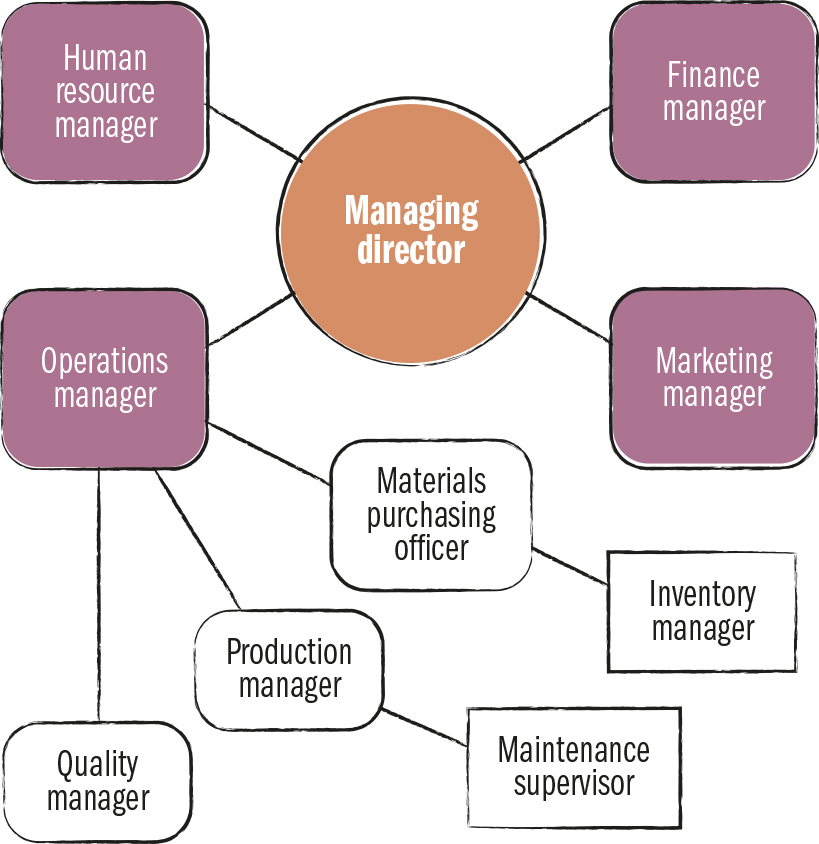
Effective operations management adds value to the business by increasing productivity, reducing costs and improving quality. This is to achieve a strategic competitive advantage through lower costs and/or differentiated goods. The business can offer a better quality good at a cheaper price. To perform their role the operations manager will need all the skills and qualities discussed in Topic 2, Business management, of the Preliminary course, in particular communication, decision-making, delegating and complex problem-solving. In a large business that uses a functional organisational structure, the operations manager will supervise specialist line managers (see Source 1.2). In a small business, operations may be managed by an owner, factory manager or sales manager.
The operations manager will consider business operations as an entire system. A business must be able to produce goods and services that best satisfy the wants and needs of customers at a competitive price. Through their role, the operations manager can add value to the product at each stage of operations. Ultimately, with an effective and efficient operations system a business will achieve the short- and long-term objectives of the business, primarily profit.